Questions to Ask Before Adding Peruvian Textiles to Wedding Attire
Before adding a Peruvian textile to wedding attire, ask what it is connected to, who made it, how it was intended to be used, and how it will behave throughout the day. Then discuss the answers with the maker, a knowledgeable family member, a community-connected adviser, ceremony lead, venue, tailor, cleaner, or conservator as appropriate.
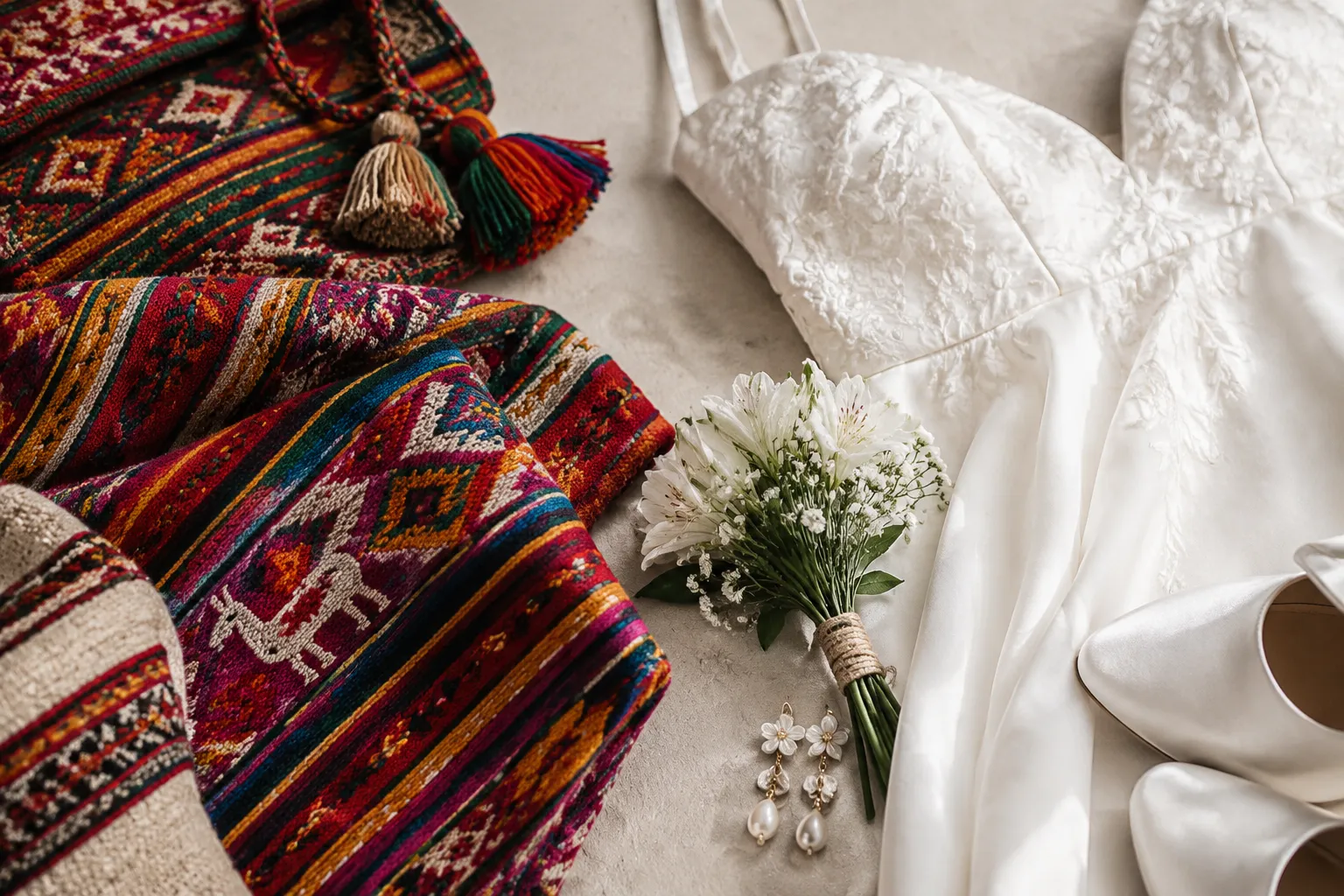
There is no single national model for Peruvian textile wedding attire. A pollera, lliclla, chumpi, montera, poncho, chullo, shawl, belt, or embroidered panel may carry different associations according to its region, community, construction, and setting. A modern wedding might include one textile element with a dress or suit, while a heritage-focused celebration may use more regionally connected clothing.
Questions About Region, Community, and Maker
Start with the textile’s identity rather than its appearance. Ask:
- What region and community is this textile connected to?
- What name does the maker or local community use for the garment, cloth, motif, or technique?
- Who made it, and where was it made?
- Is it contemporary, vintage, inherited, adapted, or newly produced?
- Was it made for daily wear, ceremony, display, gifting, or another purpose?
- Can the maker explain its construction and intended use?
- How will the maker be credited and paid?
- Is the seller describing a specific community tradition, or using broad market language about “Peruvian” design?
Regional context matters because textile traditions in Peru are not interchangeable. Research on contemporary dress in Canchis, Cusco, describes named communities with woven and richly embroidered clothing. That supports a community-specific conversation, not one rule for all Peruvian wedding attire.
A museum record or seller description can help with vocabulary, but it cannot establish current permission, contemporary wedding use, or community acceptance by itself. When a textile has a strongly regional or ceremonial association, ask someone connected to the relevant family, community, or maker.
Questions About Motifs and Meaning
Do not assume that a color, geometric design, hat, belt, or embroidered figure carries one fixed meaning across Peru. Ask:
- What does this motif mean in this specific community or family context?
- Is the design associated with a particular place, group, role, or occasion?
- Is it normally worn, gifted, displayed, or reserved for a particular setting?
- Would adapting it for a veil, sash, jacket, pocket square, or dress panel change its context?
- Are any words or symbols unsuitable as generic decoration?
- Who can explain the design’s meaning where the wedding will take place?
Terms such as Chakana, tocapu, Watay, Puyto, and kené may appear in textile discussions, but each should be checked in context. Commercial descriptions sometimes attach broad ideas about status, fertility, luck, spirituality, or protection to motifs. Those interpretations should not be treated as universal.
Use the textile because its provenance and intended role are understood, rather than because a product description assigns it a promised symbolic result.
Questions About Fiber, Dye, and Weave
Appearance alone cannot establish a textile’s fiber, dye, origin, or construction. Ask the maker or seller:
- Is the fiber alpaca, another camelid fiber, wool, cotton, or a blend?
- Is the material naturally colored, dyed, embroidered, or digitally printed?
- Which parts are woven, embroidered, appliquéd, or machine stitched?
- Was it made on a backstrap loom or by another method?
- Is the structure tapestry weave, warp-faced weaving, brocade, or a modern adaptation?
- How does the fabric behave when folded, pinned, or draped?
- Does it have a lining, backing, or stabilizing layer?
- Are there loose threads, fragile edges, metallic elements, or raised embroidery?
Research on Peruvian and Andean textiles distinguishes plant and animal fibers, preparation methods, and dyeing processes. Final color can depend on the fiber, dye source, preparation, and fixing materials. These details create useful questions, but they cannot identify a particular textile’s contents without piece-specific information.
Words such as “alpaca,” “natural dye,” “handwoven,” or “authentic” should prompt further questions. Request the maker’s description of the fiber and process, and keep that provenance information with the garment.
Questions About Weight, Warmth, and Drape
A textile that looks suitable in a photograph may behave differently during a long ceremony or crowded reception. Ask:
- How much does the textile weigh?
- Will it feel warm under lights, during dancing, or in a heated venue?
- Does it hold its shape, fall softly, or resist draping?
- Could it catch on jewelry, chair backs, bouquet stems, or other garments?
- Can the wearer lift their arms, sit, walk, dance, and enter the vehicle comfortably?
- Could moisture make the textile heavier or harder to manage?
- Will it work with the base garment’s fabric and silhouette?
- Can the photographer show its details without requiring uncomfortable positioning?
The available material does not provide a field test for contemporary wedding wear. Check comfort and movement with the actual piece, complete outfit, shoes, hairstyle, bouquet, jacket, and accessories.
Try the outfit while standing, seated, walking, dancing, and moving through the venue’s narrowest spaces. This fitting can reveal practical problems that a fabric description will miss.
Questions About Ceremony and Reception Fit
The same textile may work differently during the ceremony, portraits, dinner, and dancing. Ask:
- Is it intended for the ceremony, portraits, reception, or only part of the day?
- Does the ceremony lead have expectations about attire or ceremonial objects?
- Does the venue have rules about pins, hanging textiles, floor contact, or draping?
- Will it be worn by one partner, both partners, members of the wedding party, or family?
- Is it part of the couple’s heritage, a family gift, a regional connection, or a design choice?
- Does the planned use fit the family’s understanding of the occasion?
- Would a different wrap, hat, belt, or embroidered piece work better for the reception?
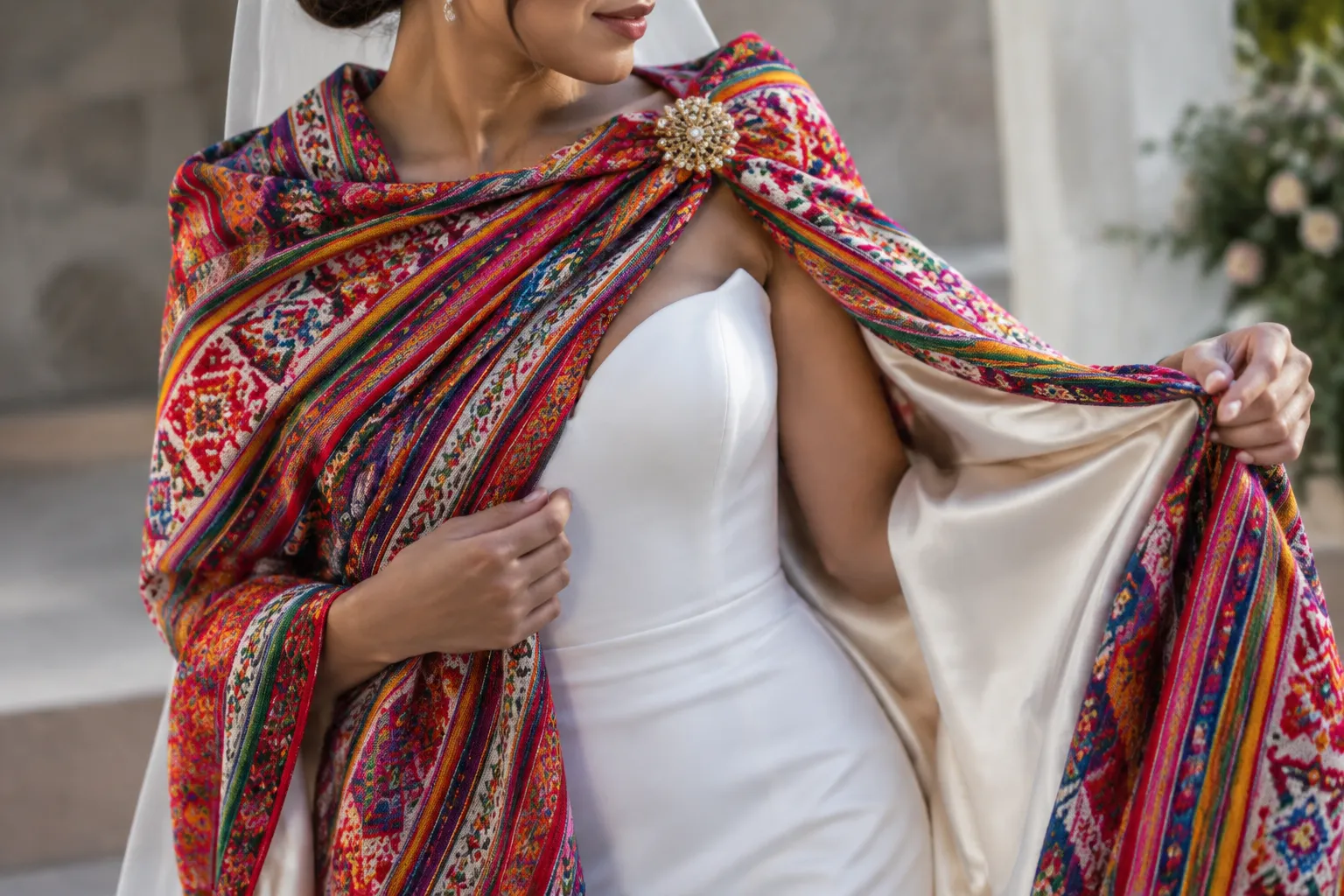
Wedding attire may vary by family, region, city, rural or heritage-focused setting, ceremony type, and diaspora context. Combining a white dress or suit with one Peruvian textile element is one possible approach, not a universal practice.
A textile associated with a particular ceremony or community should not be added only because it photographs well. Confirm its intended role before adapting it into a modern outfit.
Questions About Fastening, Lining, and Alterations
Alterations can affect both the cloth and the context in which it is understood. Ask a tailor:
- Where can the textile be pinned or stitched without damaging its structure?
- Can it be attached without cutting the original cloth?
- Does the garment need a lining or protective backing?
- Will added interfacing change its drape or weight?
- Can the original edges, embroidery, and closures remain visible?
- Are the seams strong enough for repeated movement?
- Can the piece be removed after portraits or before dancing?
- Should a separate modern base garment carry the stress instead?
Ask the maker or a conservator before cutting, pressing, washing, gluing, or permanently altering an inherited, vintage, delicate, or historically significant textile.
A museum record of a lliclla catalogued as a woman’s wedding mantle is an object-level historical reference. It does not show that every lliclla has the same use, construction, condition, or suitability for contemporary alteration.
A reversible attachment may be easier to evaluate than permanent cutting, but the appropriate method depends on the actual textile. The tailor should inspect the piece instead of relying on a photograph.
Questions About Colorfastness and Dye Transfer
Do not assume that a colorful textile will remain stable against a white dress, shirt, upholstery, or skin throughout a long wedding day. Ask:
- Has the maker provided care or dye information?
- Could rubbing, perspiration, light, moisture, washing, or cleaning affect the color?
- Could the textile transfer color onto a white garment or venue surface?
- Which areas are most likely to rub against the base garment?
- Has the specific piece been assessed for the planned use?
- What should happen if the textile becomes damp?
- Should a protective layer separate it from white clothing?
General textile-testing guidance identifies fading and color transfer as concerns associated with light, rubbing, perspiration, washing, and dry cleaning. This explains why the question matters, but it does not assess a particular textile.
If the piece will repeatedly touch a white garment, ask a textile professional or cleaner about a piece-specific assessment. Do not infer color stability from appearance, age, seller wording, or previous display.
Questions About Cleaning, Transport, and Storage
Wedding-day handling can matter as much as the original styling decision. Ask:
- What cleaning method suits this fiber and construction?
- Should it be cleaned before the wedding, afterward, or only with specialist guidance?
- How should it be folded or rolled for transport?
- Should it be protected from light, moisture, perfume, perspiration, food, and makeup?
- Where will it rest during photographs and the reception?
- Can it be stored flat, rolled, or hung?
- What should happen if it becomes stained?
- Who will handle it after the celebration?
Conservation guidance can help you plan handling, display, storage, cleaning, and material-limit questions. It does not determine whether a particular Peruvian textile should be worn, washed, altered, or stored in one specific way.
For a fragile, inherited, antique, or unusually constructed piece, ask a conservator before the wedding. Include a clean, dry place in the photo and reception plan so the textile is not left on a floor, damp surface, or rough chair.
Questions to Confirm Before Finalizing the Outfit
Before committing to the outfit, record answers in five areas:
- Context: What region, community, maker, garment name, and intended use are connected to the textile?
- Meaning: What does the motif or garment mean here, and who can explain that meaning?
- Material: What are the fiber, dye, weave, weight, warmth, drape, lining, and fastening limits?
- Wedding use: Will it work for the ceremony, portraits, reception movement, weather, venue, and photo timeline?
- Care: How should it be pinned, transported, cleaned, protected from rubbing or moisture, and stored afterward?
Keep the maker’s name, region, material description, care instructions, and alteration limits with the garment. The aim is not to label a textile universally suitable or meaningful. It is to understand this particular piece well enough to decide with the people who can explain its context, construction, and care.
Sources
- Taquile and its textile art
- Museo Larco: Textiles
- Canadian Conservation Institute: Care of Objects Made from Textiles
- Andean Textiles - The Metropolitan Museum of Art
- Diseño textil y vestimentario tradicional de los pueblos de Canchis (Cuzco)
- El color en la memoria: tintes vegetales usados en la tradición de las comunidades andinas y amazónicas peruanas
- Textile Properties of Native Cotton From Pachachaca Valley - Apurimac, Peru, Dyed With Buddleja Coriacea Dye
- Colorfastness Testing