A Family Wedding Planning Meeting Agenda for Couples, Parents, and Elders
A useful family wedding meeting agenda should settle six points: shared priorities, decision authority, contributions, expectations, responsibilities, and follow-up. It should also distinguish family preferences from details that need confirmation with a municipality, parish, venue, vendor, consulate, or travel provider.

The agenda below is an optional conversation tool for Peru-focused and diaspora celebrations. Families may approach money, traditions, guest lists, and elder participation differently. The couple can shorten, reorder, or revisit the agenda as their circumstances require.
Family Wedding Meeting Agenda at a Glance
- Explain the purpose of the meeting.
- Confirm what the couple has already decided.
- Name three shared wedding priorities.
- State the couple’s non-negotiables.
- Discuss the location, ceremony format, and guest movement.
- Record contributions and any conditions attached to them.
- Compare family guest expectations.
- Discuss traditions, symbols, and ceremony preferences.
- Assign decision owners and task owners.
- Agree on communication boundaries.
- Record unresolved questions and external checks.
- Set deadlines and send a written recap.
This sequence makes expectations visible without assuming that parents, elders, or contributors have identical roles. One meeting may clarify the next decisions without resolving every disagreement.
Open the Wedding Planning Meeting
Begin by explaining why everyone has been invited and what the conversation can accomplish. One person can facilitate while another takes notes, but neither role gives that person additional decision authority.
“We want to plan a celebration that reflects us while treating both families with care. Today, we would like to discuss priorities, contributions, guests, traditions, and responsibilities. We will record what we decide, what remains open, and what needs confirmation elsewhere.”
For a diaspora celebration, add the practical effect of distance:
“Because relatives are joining from different places, we also need to discuss travel, timing, remote participation, and what is manageable for guests.”
Confirm Settled Choices and Shared Priorities
Before requesting suggestions, identify which choices are settled and which remain open. This prevents the conversation from repeatedly returning to decisions the couple does not intend to change.
- Preferred month or season
- Country, city, or region
- Possible civil, Catholic, symbolic, or combined format
- Approximate guest count
- Whether children or plus-ones are being considered
- The couple’s spending limit
- Accessibility and dietary priorities
- Elements the couple does not want included
Describe the status of each choice carefully. A preferred city is not a booked venue, and interest in a parish ceremony is not a confirmed arrangement. Civil ceremony planning boundaries may vary by municipality, while parish processes depend on the particular setting and current circumstances.
Next, ask each participant to name one or two outcomes that matter most. The couple can then choose three leading priorities, such as keeping spending within an agreed limit, including important relatives, reducing travel strain, or allowing comfortable reception pacing for older guests.
A priority is not yet a solution. “We want grandparents to participate comfortably” leaves room to compare timing, transport, seating, venue access, and the photo timeline.

State Non-Negotiables Without Turning Every Preference Into a Rule
The couple’s non-negotiables should be few, clear, and within their control. Examples include a maximum personal budget, no unannounced guest additions, no bookings made in their names without consent, an accessibility need, or limits on photography and social media.
Parents and elders can name serious concerns, but a concern should remain a concern until the affected people discuss it. If two boundaries conflict, record the disagreement, who is affected, and what information is missing. An immediate compromise may not be useful.
Discuss Location, Ceremony, and Guest Movement
Location affects travel, attendance, timing, provider access, and the number of events a family can reasonably coordinate. Discuss whether the celebration is planned for Peru or elsewhere, who would travel, and whether important guests can manage the proposed journey.
- How guests would move between ceremony and reception locations
- Whether remote participation is practical
- Whether the family expects separate civil, parish, or family events
- How the location affects older guests and people with access needs
- How travel and transfers affect the photo timeline and reception pacing
For diaspora families, “home” may refer to the couple’s current city, a family hometown, or another place entirely. Treat these as distinct preferences rather than assigning one greater cultural weight.
Do not settle civil, parish, consular, or travel questions from memory. Add them to the external confirmation list.
Record Contributions Without Assuming Control
Discuss the amount, timing, conditions, and decision expectations of each contribution separately. Providing money or practical help does not automatically determine who makes every connected choice.
- Is the offer a fixed amount, direct payment, reimbursement, or practical help?
- When will it be available?
- Does it depend on a guest, venue, tradition, or event?
- Who selects the provider and reviews the agreement?
- What happens if the cost exceeds the contribution?
- Can the couple decline the offer?
| Item | Contributor | Amount or help | Conditions | Decision owner |
|---|---|---|---|---|
| Reception meal | To be discussed | Fixed amount or direct payment | Guest limit may apply | Couple or named owner |
| Family transport | Named relative | Coordination or payment | Route and passenger count | Named owner |
| Ceremony flowers | Named contributor | Direct payment | Spending cap | Named owner |
Do not commit an absent relative to money or work. Mark a proposed contribution as pending until that person responds directly.
Compare Family Guest Expectations
Discuss guest categories before debating individual names. This reveals differences about closeness, family obligation, and representation without treating one family’s approach as a national rule.
- What is the current working capacity?
- Which relatives are especially important to the couple?
- Are parents requesting friends, colleagues, or community contacts?
- How will children and plus-ones be handled?
- Who needs early notice or travel planning time?
- Who may struggle with stairs, altitude, transfers, or late hours?
- Who can add a name to the working list?
- What happens when requests exceed the budget or venue capacity?
Label each guest as proposed, invitation planned, invited, accepted, or declined. A proposed guest should not be described as invited before an invitation has been issued. Confirm capacity and access conditions with the venue.
Discuss Traditions and Ceremony Preferences
Ask which elements matter to relatives and why. Do not assume that every Peruvian family, region, parish, or community follows the same practices.
- Religious participation or spoken family remarks
- The involvement of padrinos
- Music, food, clothing, or textiles with family significance
- An Andean symbol or ceremony element requested by the couple
- The order of family photographs
- Who accompanies or welcomes the couple
- Expectations around dancing, speeches, or gift presentation
Classify each proposal as a personal preference, family tradition, ceremony request, venue-dependent idea, or matter needing confirmation. If a Catholic ceremony is being considered, ask the parish or ceremony lead what can be included. For an Andean element, discuss its meaning, who would lead it, and whether the chosen setting can accommodate it.
Assign Roles and Communication Boundaries
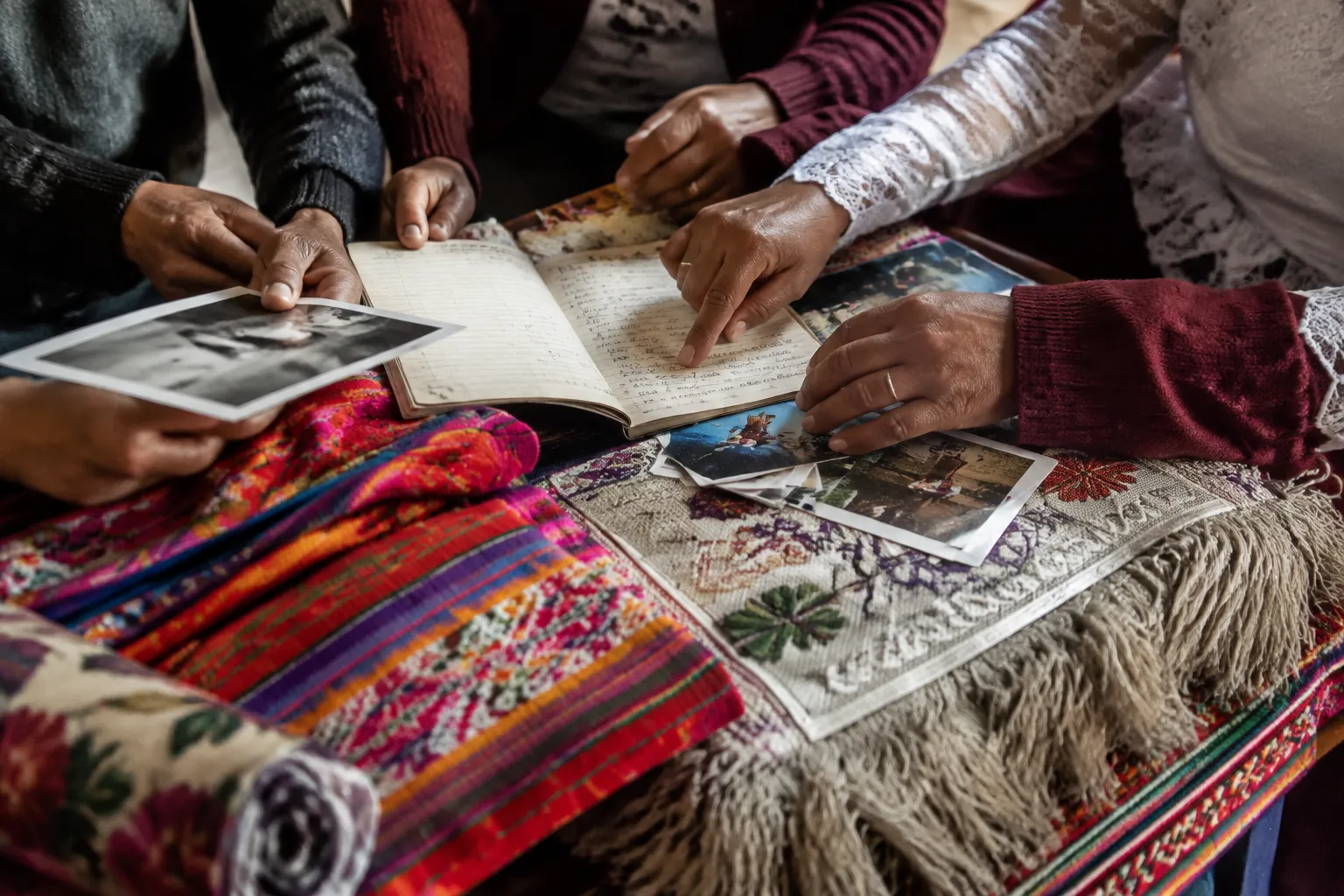
Ask what each person is willing and able to do instead of assigning work by age, gender, or family side. Give each responsibility one primary owner, even when several relatives will help.
- Maintain family contact details
- Collect accessibility and dietary information
- Coordinate transport questions
- Contact relatives who do not use digital invitations
- Prepare the family photograph list
- Track contribution details
- Coordinate remote participation
- Gather questions for the municipality, parish, venue, or provider
Record less visible work as well, including answering messages, translating information, comparing schedules, and following up on deadlines. Otherwise, that labor can quietly accumulate with one partner or parent.
Then agree on one update channel, who may contact providers, who can approve changes, which choices involve both partners, and what may be shared with extended relatives. Consultation, contribution, task ownership, and final decision authority are separate roles.
Close With Decisions, Owners, and Deadlines
Before ending, ask whether anyone has an unrecorded objection, concern, or condition. Polite silence should not be treated as agreement.
| Decision or task | Status | Decision owner | Task owner | Next check |
|---|---|---|---|---|
| Set working guest limit | Open | Couple | Named person gathers counts | Venue capacity |
| Confirm ceremony format | Pending | Couple | Named person contacts ceremony lead | Municipality or parish |
| Prepare transport options | Researching | Named owner | Named family member | Transport provider |
Add a realistic date to each open item. Use “pending confirmation” when a preferred plan depends on another party, so relatives do not report it as settled.
Send the Written Recap
Send a concise recap while the discussion is still clear. Include decisions, open questions, contributions and conditions, assigned roles, deadlines, and the date or trigger for the next conversation.
Ask participants to correct factual mistakes without reopening every settled preference by message. Update the shared record whenever a contribution, responsibility, or deadline changes.
The useful outcome is a common record: what the couple and family understand, who acts next, which boundaries remain, and which details need current confirmation before deposits, announcements, or travel plans proceed.
Sources
- Family Decision-Making Process of Wedding Process
- Is It Our Day or the Bride’s Day? The Division of Wedding Labor and Its Meaning for Couples
- The effects of time living away from home and family support on intention to host a destination wedding
- A wedding in the family: home making in a global kin network
- Wedding paradoxes: individualized conformity and the ‘perfect day’