How to Layer Wedding Attire for Cusco Temperature Changes
For Cusco wedding attire, start with a formal outfit that looks complete on its own, add one polished warm layer, and bring a compact weather layer only when the forecast and venue plan make it useful. This approach lets you adjust between outdoor arrivals, photographs, indoor spaces, and a cooler evening without making the outfit look like travel gear.
The final combination depends on the invitation, ceremony timing, venue layout, walking conditions, and current local forecast. Confirm those details before choosing the pieces you will wear or carry.
Build the Outfit in Three Parts
A formal base that works without an outer layer
Your base outfit should already match the requested dress code. A formal dress, jumpsuit, suit, tailored separates, or polished blouse with a long skirt or tailored trousers can all work, depending on the event.
Choose something you can wear comfortably during arrivals, photographs, dining, and dancing after removing a jacket or wrap. The base should allow normal movement and should not depend on a coat to look finished.
- A formal dress, jumpsuit, suit, or tailored separates
- A dress shirt with formal trousers and a coordinated jacket
- A polished blouse with a long skirt or tailored trousers
- Dress shoes that suit the expected walking surface
Before settling on neckline, sleeve, or hem details, ask whether the event is a parish ceremony, civil ceremony, family-centered celebration, or relaxed outdoor gathering. Expectations may differ between couples, families, parishes, venues, and diaspora settings.
One visible warm layer
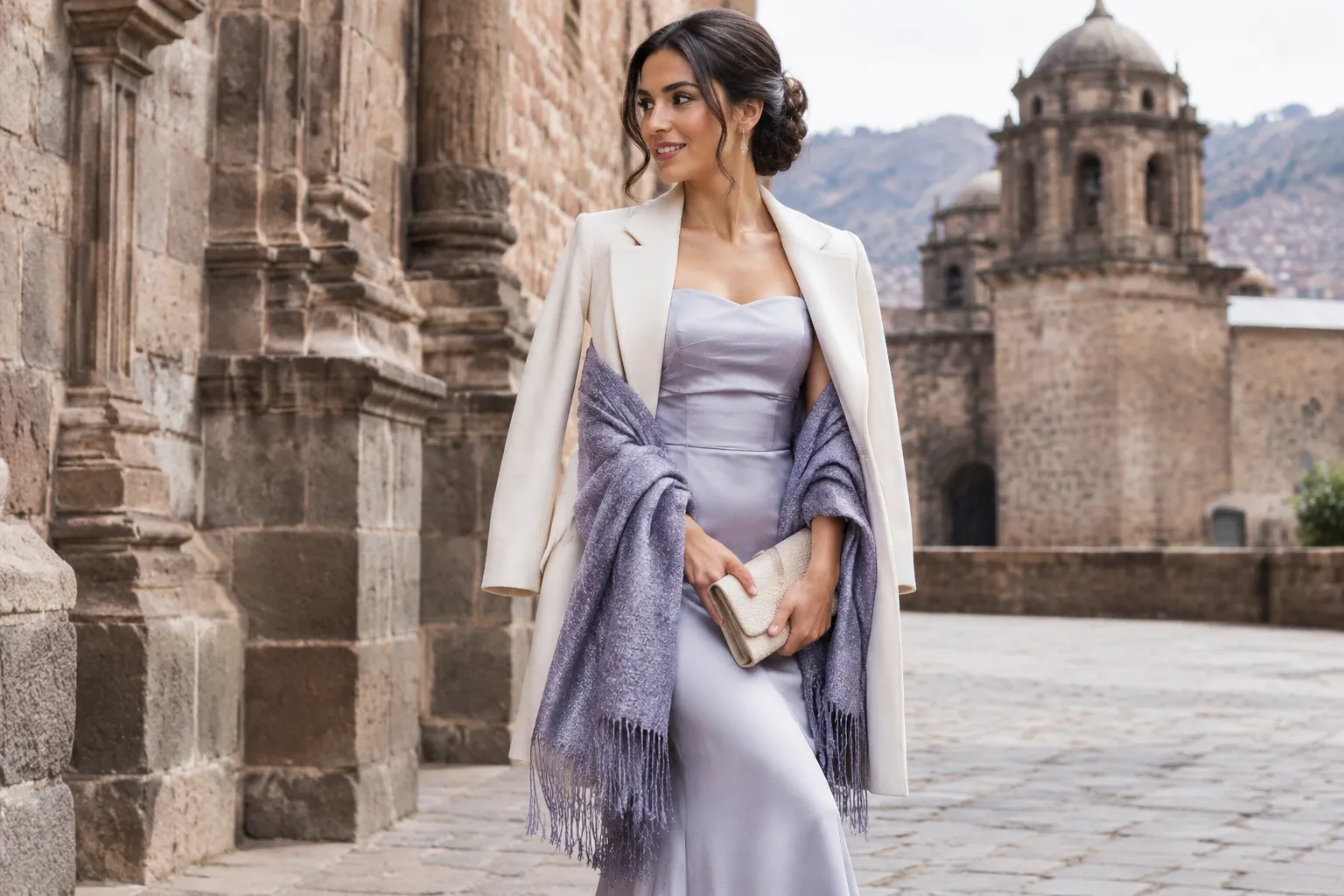
The middle layer should preserve the formality of the outfit while giving you an easy option for cooler periods. A refined wrap, structured cardigan, tailored jacket, formal cape, light dress coat, waistcoat, or coordinated suit jacket can work well.
Choose one piece that comes off without disturbing a hairstyle, veil, jewelry, boutonniere, or carefully arranged clothing. A wrap may suit a dress, while a tailored jacket may stay more secure during walking and photographs.
A Cusco wedding shawl or wrap can be a thoughtful choice when it looks intentional with the rest of the outfit. Alpaca, wool, woven cloth, and embroidery are optional style choices, not destination-wide requirements. Research on dress and textiles in the Cusco region describes locally specific meanings in cloth, wrapping, color, and decoration; it does not establish one textile as the expected choice for every wedding guest.
A compact weather layer
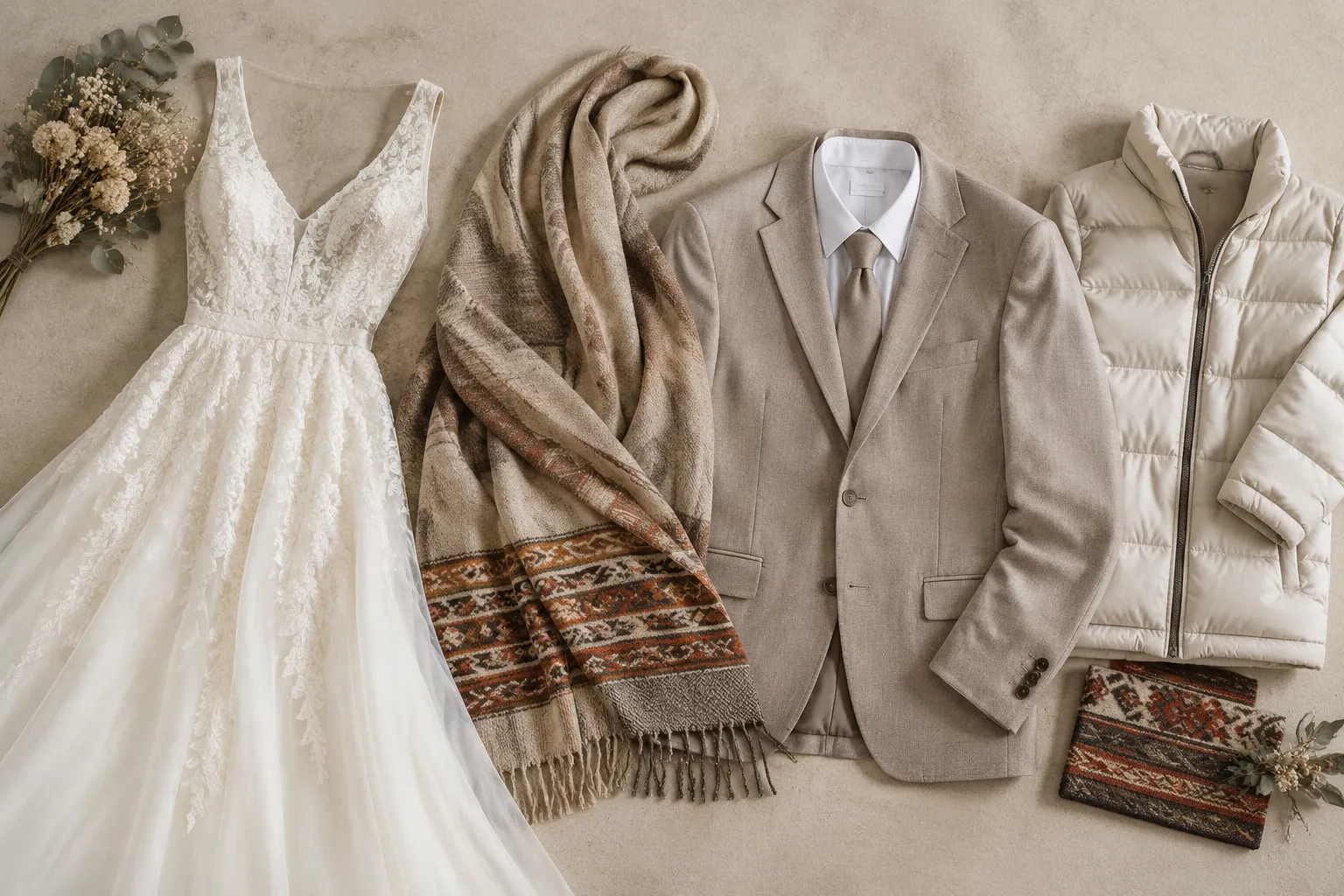
Add a discreet weather layer when the current forecast, outdoor schedule, or venue information suggests exposure. A light tailored coat or compact rain layer can be useful for movement between vehicles, courtyards, gardens, and covered spaces.
Keep this layer easy to store after arrival. Ask whether there is coat storage, a covered waiting area, umbrellas, or someone who can hold it during photographs. A broad seasonal description cannot tell you what conditions will be like at a particular venue on a particular date, so check a current location-specific forecast near the event.
Adjust for Each Part of the Day
Arrival and transport
Plan the arrival layer around the distance from transport to the entrance. Uneven paving, cobbles, slopes, wet ground, or an exposed queue may affect the shoes and outerwear that make sense.
A formal base with one tailored jacket or neat wrap is usually easier to manage than several bulky pieces. Avoid building the outfit around hiking boots, fleece, puffers, or technical clothing unless the couple has explicitly set a practical outdoor dress code.
- How far is the walk from transport to the venue?
- Is the entrance paved, cobbled, sloped, or exposed?
- Will guests wait outdoors before entering?
- Can a coat or rain layer be stored quickly?
The ceremony
The event dress code matters more than general destination packing advice. Cusco does not, by itself, determine whether a wedding is formal, festive, religious, semi-formal, or relaxed.
For a parish ceremony or another setting with particular expectations, ask the couple or ceremony lead about shoulder coverage, hem length, head coverings, jacket removal, and arrival timing. Families may handle these details differently, and venue guidance may not answer ceremony-specific questions.
Choose a layer that can remain on without changing the formal impression of the outfit. A fitted jacket, coordinated cape, or restrained wrap will usually sit more naturally during a ceremony than a casual rain jacket.
Outdoor photographs
Photography is often the moment when adjustable Cusco wedding outfit layers matter most. A schedule may move guests between direct sun, shade, stone courtyards, gardens, and indoor rooms in a relatively short period.
- Use a layer that can be removed quickly.
- Check that sleeves do not interfere with jewelry, bouquets, or corsages.
- Choose a wrap or jacket that does not conceal important outfit details.
- Wear shoes that suit the actual surfaces.
- Keep a compact rain layer available when the forecast or venue plan suggests exposure.
Ask whether photographs happen before or after the ceremony and how long the outdoor portion may last. That answer tells you whether your warmest layer should stay close at hand rather than packed away.
The reception and evening
An outdoor reception after sunset may call for a more substantial removable layer than an indoor dinner. Confirm whether guests will move between rooms and outdoor spaces, and whether speeches, dancing, or late photographs take place outside.
A tailored coat, cape, structured cardigan, or substantial wrap may suit cooler evening conditions better than a thin fashion layer. The right choice still depends on the formal base, expected dress code, and the amount of time you may spend outdoors.
Choose Footwear Around the Venue, Not the Destination
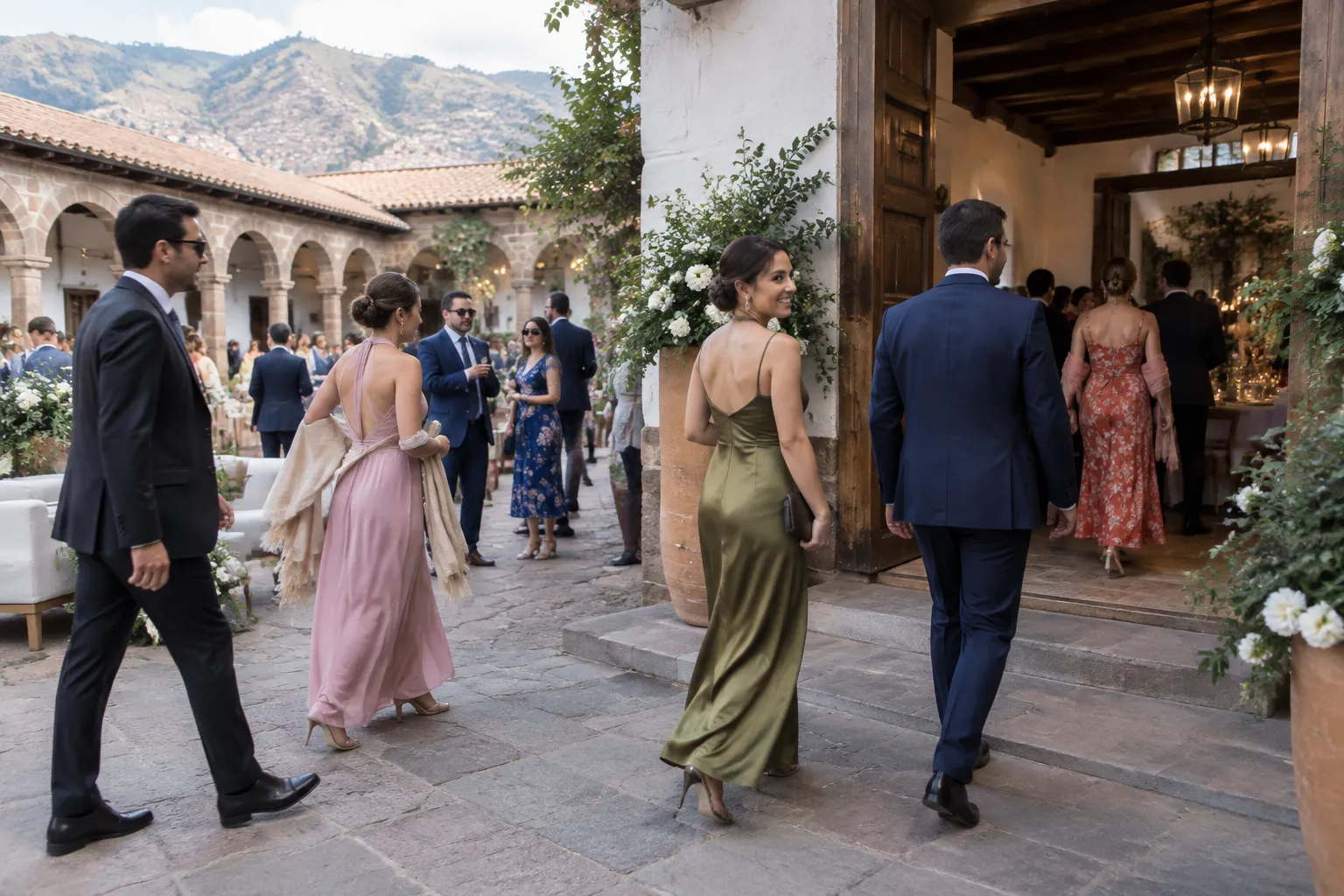
Cusco wedding footwear should balance formality with the actual guest path. Consider cobbles, slopes, wet ground, transport arrangements, walking distance, and the locations planned for photographs.
A formal shoe is not automatically practical for every venue. Ask whether guests will walk between ceremony and reception spaces, whether photographs involve grass or stone, and whether a coordinated second pair is realistic during the schedule.
- Will there be cobbled or uneven surfaces?
- Could rain affect the ground?
- Are photographs planned on grass, stone, or garden paths?
- Will changing shoes interrupt the day?
Choose footwear that lets you walk normally without changing your posture or creating a separate casual look.
Keep the Layers Intentional
Layering looks most polished when each piece has a clear role: a complete formal base, one visible warm layer, and weather protection that stays compact until needed. Several loosely matched layers can make an otherwise formal outfit look unfinished.
- Check that the jacket closes without pulling across the chest or waist.
- Make sure the wrap does not hide a bouquet, boutonniere, or important neckline.
- Confirm that coat sleeves fit over the formal sleeves beneath them.
- Keep hems clear of the ground when walking.
- Choose pieces that can be removed without undoing hair, jewelry, or fastening details.
- Avoid excess bulk beneath a coat or jacket.
A simple base, one coordinated insulating layer, and one packable weather layer usually gives you more control than carrying several competing pieces.
What Cultural Context Can and Cannot Tell You
Studies of clothing in the wider Cusco region describe how garments can communicate identity, place, belonging, and participation in particular settings. They also show that textile choices, wrapping, embroidery, color, and layering may carry meanings that are specific to a community or occasion.
That context supports a respectful approach. Do not treat ponchos, llicllas, alpaca, wool, or embroidered textiles as generic destination decorations. It also does not mean wedding guests should wear traditional clothing, or that one fabric, silhouette, or level of coverage applies across Cusco celebrations.
If you are uncertain about a textile, color, modesty question, or ceremony expectation, ask the couple, a family member, the venue, parish, or ceremony lead. Event-specific guidance is more useful than a broad rule about what people wear in the region.
Questions to Send Before You Pack
Could you confirm the dress code, ceremony setting, outdoor photography plans, walking distance, and whether the reception continues outside after dark? I am planning a formal base with a removable warm layer and want to bring the most suitable weather layer.
For a parish or family-centered ceremony, you might also ask:
Are there any expectations about shoulder coverage, hem length, jackets, or removing outer layers during the ceremony?
These questions give you a clearer basis for choosing a wrap, jacket, coat, or rain layer than a destination-wide dress rule.
Common Misunderstandings About Cusco Wedding Attire
A single temperature reading will decide the outfit
One reading cannot describe arrivals, sun, shade, wind, rain, indoor spaces, walking, and evening timing. Compare the current local forecast with the actual event schedule and venue plan.
A dry-season label means rain protection is unnecessary
Seasonal descriptions are broad context, not a promise about one wedding day. A compact rain layer may still be sensible when outdoor photographs, open courtyards, or long transfers are planned.
Cusco requires traditional or unusually formal clothing
The invitation, ceremony type, couple, family, and venue set the relevant expectations. Regional textile research is useful for avoiding cultural shortcuts, not for creating a universal guest uniform.
Natural fibers are required
Wool, alpaca, and other natural fabrics may appeal for texture, warmth, or personal style. The available material does not establish them as required wedding fabrics or as proof that an outfit is culturally appropriate.
Final Check
Build your Cusco wedding attire around a formal base that works on its own. Add one polished warm layer, then decide whether to carry a compact weather layer after checking the forecast and venue schedule.
Before packing, confirm the dress code, ceremony setting, photo timeline, walking conditions, coat storage, covered areas, and whether the reception continues outside after dark. Those answers will narrow the choice between a wrap, shawl, tailored jacket, cape, light coat, or rain layer.
Sources
- Climate Scenarios for Peru
- Vestido indígena y moda en Cuzco. Significados del vestido indígena contemporáneo de San Pablo y de Tinta de la provincia de Canchis en los Andes sur peruanos
- Diseño textil y vestimentario tradicional de los pueblos de Canchis (Cuzco)
- Textile Traditions of Ausangate. Peru and Indigenous Strategies for Dealing With Tourism and the Cuzco Market
- Los bordados de la indumentaria indígena tradicional andina de Canchis
- Una señorita a carta cabal: un estudio sobre la construcción de la feminidad en la comparsa Qoyacha en Paucartambo, Cusco