What to Clarify Before Asking a Relative to Join Your Wedding Party
Before asking a relative to join your wedding party, explain what the role means, what participation may involve, and which details are still undecided.
Family closeness does not automatically mean unlimited time, money, travel, or emotional availability. A respectful invitation gives the relative enough information to ask questions, negotiate the scope, or decline honestly.
For a Peru-focused wedding, expectations may vary by family, region, ceremony type, venue, and diaspora setting. A civil ceremony, parish celebration, Andean-influenced gathering, or destination event may involve different people and responsibilities. Treat local customs as conversation starters, then confirm ceremony details with the relevant ceremony lead, parish, municipality, venue, provider, or family lead.
Start With the Role, Not Just the Title
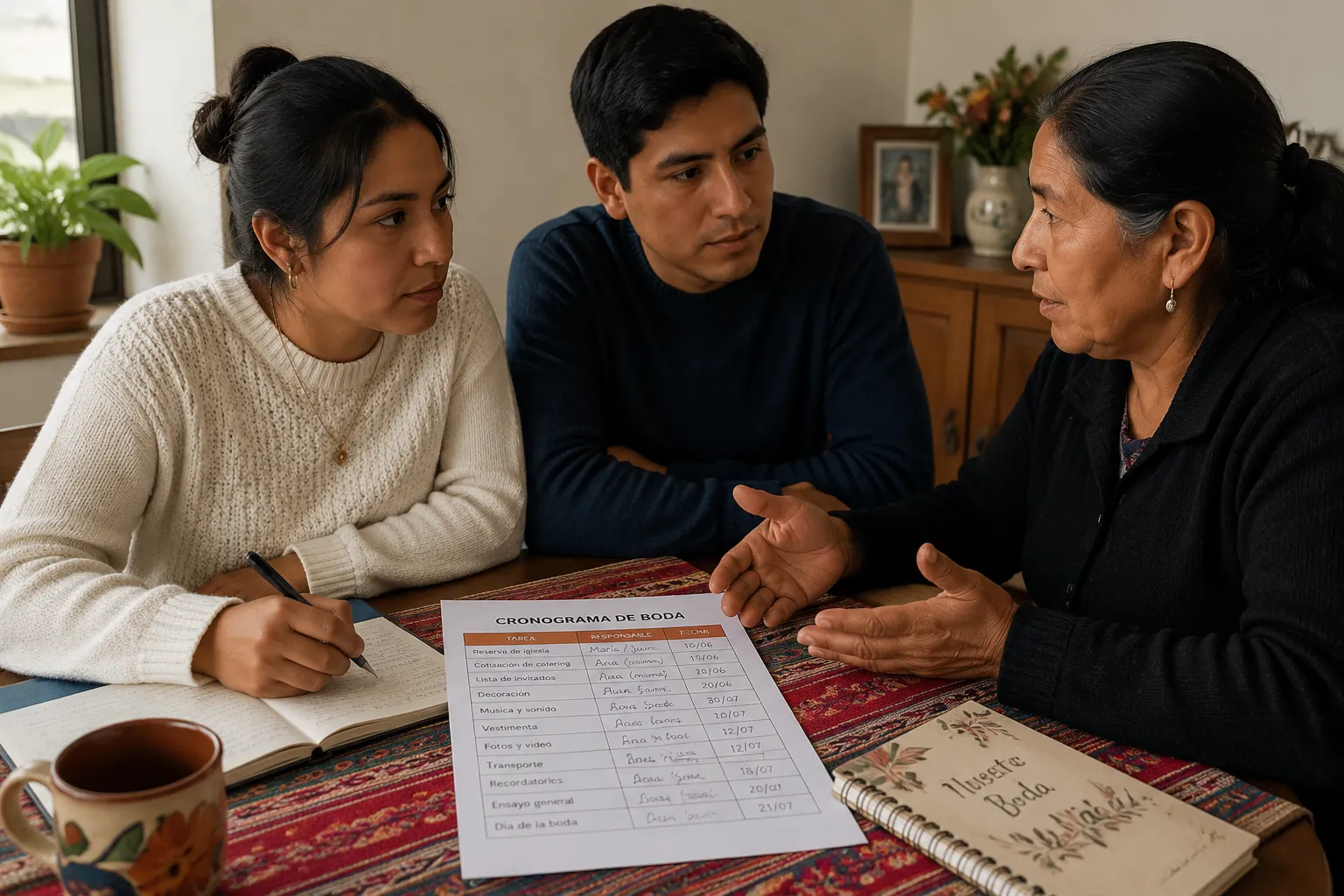
“Wedding party member” can describe different levels of involvement. In one family, the role may mainly involve standing with the couple and appearing in photographs. In another, the relative may help coordinate guests, attend several events, support a ceremony detail, or act as a visible family representative.
Before making the invitation, decide what you are actually asking for. Clarify:
- Whether the relative will have a named role during the ceremony
- Whether they will walk, stand, speak, carry an item, or assist with guests
- Whether they will join family introductions or formal photographs
- Whether the role connects with a padrino or another family responsibility
- Whether the role continues beyond the wedding day
- Who will explain ceremony instructions and timing
- Which parts are personal preferences rather than confirmed arrangements
A vague title can create different interpretations, particularly when a family is combining civil and parish ceremonies or welcoming relatives from different places. Say what the role currently includes, and identify what is still being checked.
Explain the Responsibilities You Expect
“We just need you to be there” may sound simple, but it does not tell the relative how much time or coordination the role could involve.
Possible wedding party duties include joining a planning conversation, responding to messages, attending a rehearsal or ceremony briefing, helping gather relatives for photographs, supporting guest movement, or helping with reception pacing. These duties are not automatic because the person is related to the couple.
Separate the request into three groups:
- What you hope the relative will do
- What is optional or customary in your family
- What the venue, ceremony lead, parish, municipality, or provider has confirmed
For example, you might hope that a cousin will help gather relatives for a photo. That is different from a venue arranging guest movement, and different again from a ceremony lead confirming a participation detail.
Tell the relative which responsibilities are firm, which are flexible, and which remain under discussion. This prevents informal family expectations from becoming hidden work.
Discuss Costs Before the Invitation
Wedding party expenses can extend beyond clothing. Depending on the celebration, a relative may need to consider transport, accommodation, meals outside the main event, grooming, gifts, pre-wedding activities, or time away from work.
Research from other wedding settings describes how expenses can accumulate across attire, venues, travel, photography, and events before or after the ceremony. It does not establish a standard expense pattern for Peruvian weddings. It does show why couples benefit from discussing costs before asking someone to participate.
Be specific about:
- What the couple will pay for
- What the relative may need to pay for
- Whether clothing has a particular style, color, or price range
- Whether alterations, shoes, accessories, or grooming are included
- Whether travel or lodging is involved
- Whether pre-wedding meals or gatherings involve additional spending
- Whether gifts are separate from participation costs
- What happens if an expected cost changes
Do not describe an expense as small without considering the relative’s circumstances. A cost that seems manageable to the couple may be difficult for a student, parent, retired relative, or family member travelling from another country.
“We would love you to be part of the wedding party. We expect the outfit to cost approximately this amount, and you may also need to arrange your own travel. We want you to have the full picture before deciding.”
If a price or travel arrangement is not settled, say so plainly. An estimate should not sound like a fixed agreement.

Set Out the Time Commitment
Availability can be harder to judge than money. A relative may be able to attend the wedding but not several planning meetings, rehearsals, family dinners, or pre-wedding activities.
Share the dates and time windows you currently know:
- Ceremony and reception date
- Arrival and departure expectations
- Rehearsal or ceremony briefing
- Planned photography
- Family gatherings connected to the celebration
- Optional meals, outings, or parties
- Planning calls or message groups
- Early-morning preparation, if relevant
Distinguish attendance that affects the ceremony plan from activities that would simply be welcome. This matters when relatives live far away or when the celebration brings together family members from different places.
A destination or diaspora celebration may involve additional travel coordination and less local availability. Family influence may also become more complicated when the couple is balancing personal plans with expectations from relatives who live elsewhere. Identify which decisions belong to the couple and which details depend on another person or provider.
“Which parts of this schedule would be realistic for you, and which would create difficulty?”
Clarify Travel and Availability
Discuss travel expectations before the relative accepts the role. Someone may want to support the couple but still be unable to manage every transport, lodging, or timing requirement.
Explain:
- Where the wedding events will take place
- Whether more than one location is involved
- Whether the relative needs to arrive before the ceremony day
- Whether transport between locations is arranged or self-arranged
- Whether lodging is available or needs separate planning
- Whether attendance depends on work, care responsibilities, school, health, or travel documents
- Who will communicate schedule changes
Keep travel information current and factual. Confirm arrangements with the venue, travel provider, or event coordinator when appropriate. Do not promise that changes will be easy or that every provider can accommodate them.
If availability changes later, the relative should know whom to contact and whether the couple has a backup plan. Planning for that possibility does not question their commitment; it recognises that family events involve several moving parts.
Discuss Appearance and Ceremony Expectations
Appearance requests can become stressful when they appear only after someone accepts. Explain expectations about attire, colors, accessories, hair, makeup, footwear, or cultural clothing during the initial conversation.
Also clarify whether the relative will be asked to:
- Wear a particular type of clothing
- Follow a coordinated color plan
- Bring or borrow an item
- Change clothing between ceremonies
- Join a religious or cultural portion of the day
- Stand, walk, speak, or remain in a particular place
- Avoid certain accessories for photographs or ceremony reasons
A family may connect clothing or ceremony participation with identity, respect, or custom. That interpretation is not universal. Ask what the relative is comfortable wearing and whether any request creates a cultural, religious, financial, or practical concern.
If the wedding includes civil and parish elements, explain which expectations belong to each ceremony. If an Andean symbol, family ritual, or other cultural element is planned, describe its role in the event without assigning a spiritual result or assuming every relative will understand it in the same way.
Confirm ceremony-specific details with the ceremony lead. Keep family preference distinct from a parish or municipal detail.
List Pre-Wedding Activities Clearly
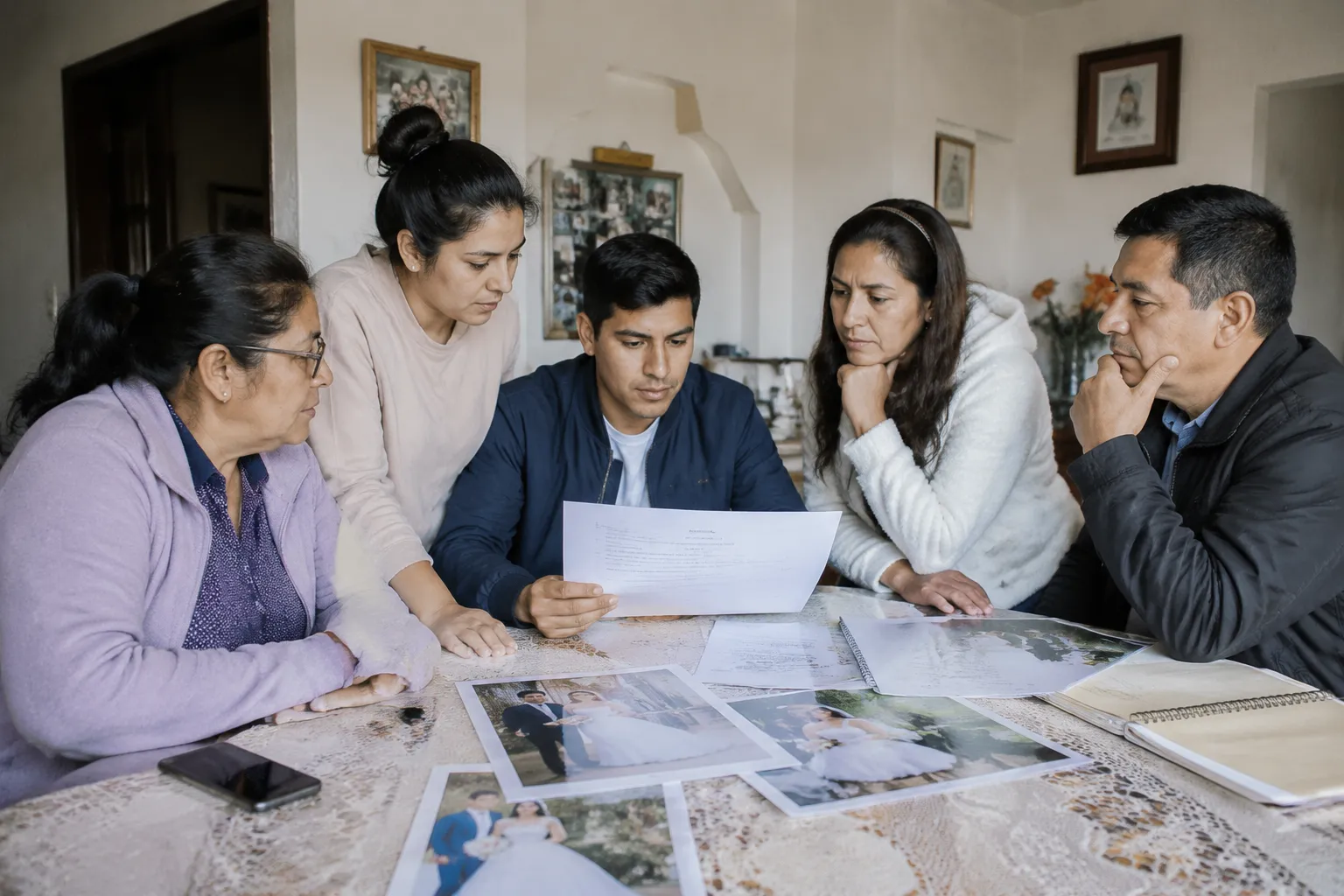
Pre-wedding events can create hidden commitments. A relative may hear “join the wedding party” without realising that participation could include dinners, welcome events, group outings, showers, rehearsals, or other gatherings.
Give the relative a short list of known activities and label each one as:
- Expected for the current plan
- Optional
- Still undecided
- Dependent on family or venue arrangements
The purpose is not to create a rigid attendance schedule. It is to prevent several informal invitations from becoming an assumed obligation.
Research on wedding-related events in other settings has described social pressure and discomfort when participation is treated as a duty. That finding should not be transferred directly to Peruvian family practice. It is a useful reminder that a relative may hesitate to refuse unless the couple makes room for an honest answer.
“You would be welcome at these events, but only the ceremony briefing and photographs are important to our plan. Please do not feel that you have to attend everything.”
Explain Communication and Decision-Making
Some relatives are asked to perform tasks. Others are expected to give opinions, coordinate family members, answer questions, or help make decisions. These forms of participation require different amounts of time and responsibility.
Clarify:
- Who will make final decisions
- Whether the relative is being asked for advice or action
- Which messages they need to answer
- Whether they will coordinate with vendors or family members
- Whether they should redirect questions to the couple
- What information is private
- How quickly they are expected to respond
Do not place a relative in charge of a task without giving them the information, authority, and time needed to handle it. Coordination work often happens through messages, reminders, follow-up, and emotional support, so it can be overlooked during the initial invitation.
“We would appreciate your help with this one task, but you would not be responsible for managing the whole group.”
Make Declining Safe
The relative should be able to decline without being framed as disloyal or uncaring. This matters when the invitation carries family meaning or when saying no may feel likely to affect the relationship.
Offer a genuine choice:
“We would be happy to have you with us, but we understand if the time, cost, travel, or responsibilities do not work for you.”
Do not ask for an immediate answer when the role involves significant expense or travel. Give the relative time to check work, care responsibilities, budget, and availability.
If they decline, ask whether they would prefer a smaller role, guest attendance, help with one task, or no formal involvement. These alternatives should be real options, not pressure to accept a reduced version of the same burden.
A Simple Conversation Before the Ask
Before making the formal invitation, cover the questions that affect the relative’s decision:
- What would the role involve during the ceremony?
- What would you need from the relative before the wedding?
- Which duties are preferences, family customs, or confirmed arrangements?
- What costs might the relative face?
- Which expenses will the couple cover?
- How many events or meetings are expected?
- Is travel involved?
- What clothing or appearance choices are involved?
- Are civil, parish, venue, or family details still awaiting confirmation?
- What can change if the relative’s availability changes?
- Can the relative ask for a smaller role or decline?
Summarise the answer in writing after the conversation. A brief message can prevent different relatives from receiving different versions of the plan.
The Agreement to Reach
The goal is not to secure a quick yes. It is to make the invitation understandable.
A useful family wedding party agreement states the role, duties, likely expenses, time and travel commitments, appearance and ceremony expectations, optional activities, decision-maker for uncertain details, and process for changes. It also leaves room to accept, negotiate, or decline.
For a Peru-focused wedding, keep variation visible. Families may organise participation differently by region, ceremony type, parish, municipality, venue, relationship, or diaspora setting. Confirm details that affect the day with the relevant lead, and describe the rest as the couple’s current plan rather than a universal rule.
The next practical step is to write down the role, costs, dates, and unresolved ceremony details before extending the invitation.