Accessibility-First Wedding Roles for Grandparents and Elders
The most meaningful wedding roles for grandparents and elders are flexible roles shaped around their preferences, access needs, comfort, and available support. Begin with a private conversation, then match the role to the ceremony format, venue route, timing, and a practical backup.
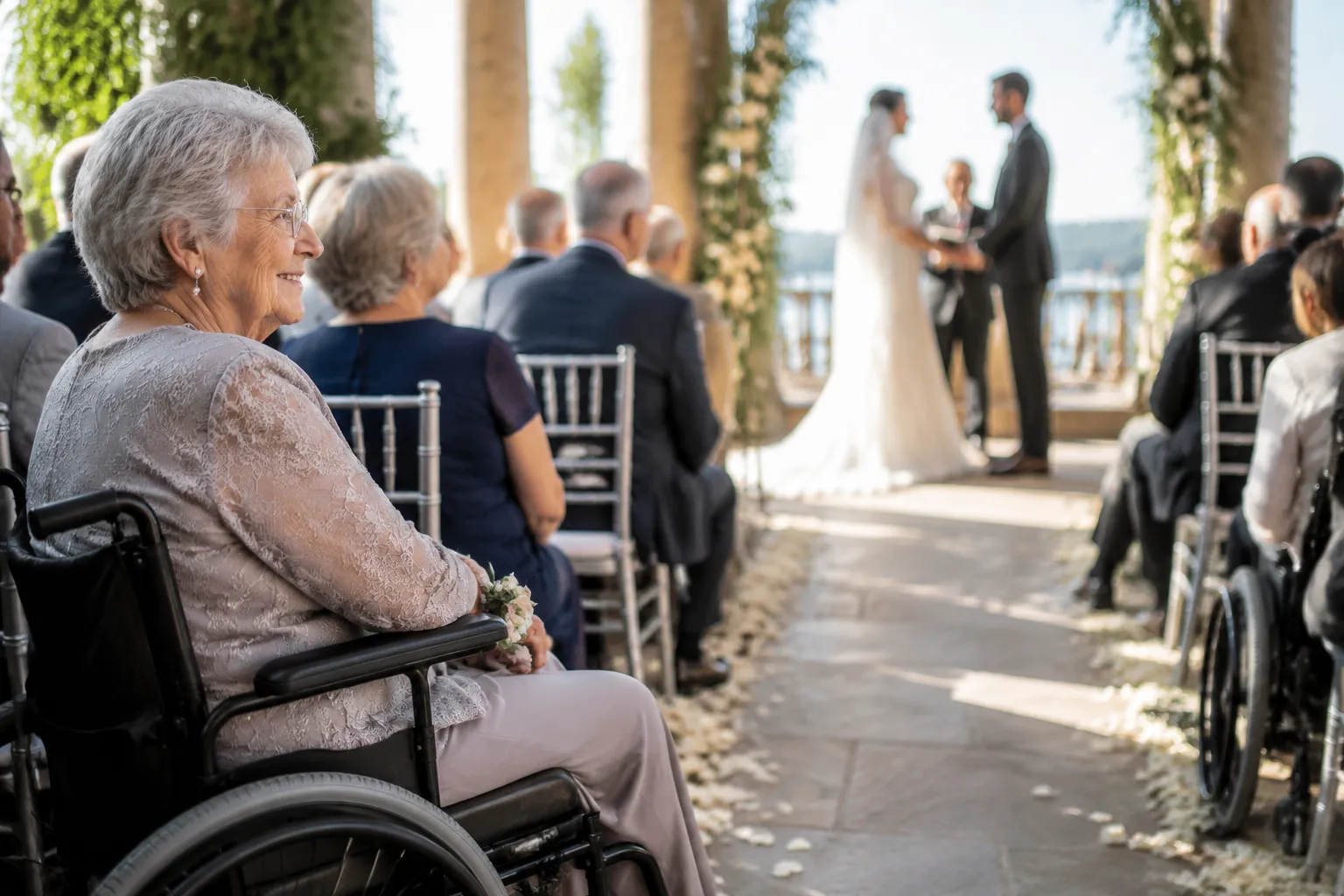
There is no single list that suits every family. A role may look different in a Peruvian, Peruvian-diaspora, civil, parish, destination, or reception setting. Family practice and ceremony arrangements can vary, so separate the family choice from the details that need local confirmation.
Start With the Elder, Not the Tradition
Ask what the elder would genuinely enjoy before suggesting a familiar family role. Avoid treating age, mobility, hearing, vision, energy, communication style, or family position as evidence of what they can or want to do.
- Would you prefer a ceremony role, a reception moment, family photos, or several short appearances?
- Would you rather speak, welcome guests, carry or present something, share a family message, or sit near the main activity?
- How long would you feel comfortable standing, walking, waiting, or speaking?
- Would a familiar person nearby make the role easier?
- Would you prefer spoken instructions, written details, a walkthrough, or a visit to the venue beforehand?
- What would make the role feel personal rather than performative?
- Would you like a shorter alternative if your energy or comfort changes?
The answer may change between elders in the same family. The planning goal is participation on terms the elder understands and chooses.
Meaningful Wedding Roles for Grandparents
These are adaptable options, not fixed wedding customs. Choose one that fits the elder’s interests and the practical conditions of the day.
Seated Welcome
An elder may welcome close relatives from a comfortable, clearly planned position instead of walking through a long processional. The role could involve receiving greetings, sharing a few words, or simply being present as an important family figure.
- Place the seat where the arrival area is easy to see.
- Keep the route clear of crowded crossings and unnecessary waiting.
- Assign a family member to explain the role to guests.
- Set a time limit and identify a quiet place for breaks.
- Name someone who can continue greeting guests if the elder ends early.
Family Message
A grandparent or elder may offer a short message during the ceremony or reception. It could be spoken, read by another person, recorded in advance, or shared privately with the couple.
Confirm the expected length, seating arrangement, microphone, printed text, and reading support. For a parish ceremony, ask the parish or ceremony lead whether the timing and format fit the service. A reception may allow more flexibility, but the venue and reception team still need the message placed in the schedule.
Presenting a Family Item
An elder may present a photograph, letter, family textile, keepsake, or another meaningful object. If carrying it is uncomfortable, another person can bring it forward while the elder introduces or receives it.
Discuss the item’s size, weight, distance, hand-to-hand support, and storage before the ceremony begins. Do not make the elder responsible for transporting or protecting an irreplaceable object without asking whether they want that responsibility.
Short Processional or Entrance Moment
Some elders may enjoy entering with the couple, a family member, or another participant. Others may prefer to begin seated or enter before guests arrive.
Ask the ceremony lead and venue team about the route, surface, distance, waiting time, seating afterward, steps, slopes, doorways, and crowded transition points. A shorter entrance can preserve the symbolic moment while reducing the physical and logistical demands.
Family Story or Photo Guide
An elder may identify relatives, explain family connections, or suggest meaningful photo groupings. This creates a useful family role without requiring public speaking or extended movement.
Schedule a short conversation before the wedding, then give the names and groupings to the photographer or family coordinator. Confirm the photo timeline so the elder is not left waiting through a long sequence of arrangements.
Reception Table Host
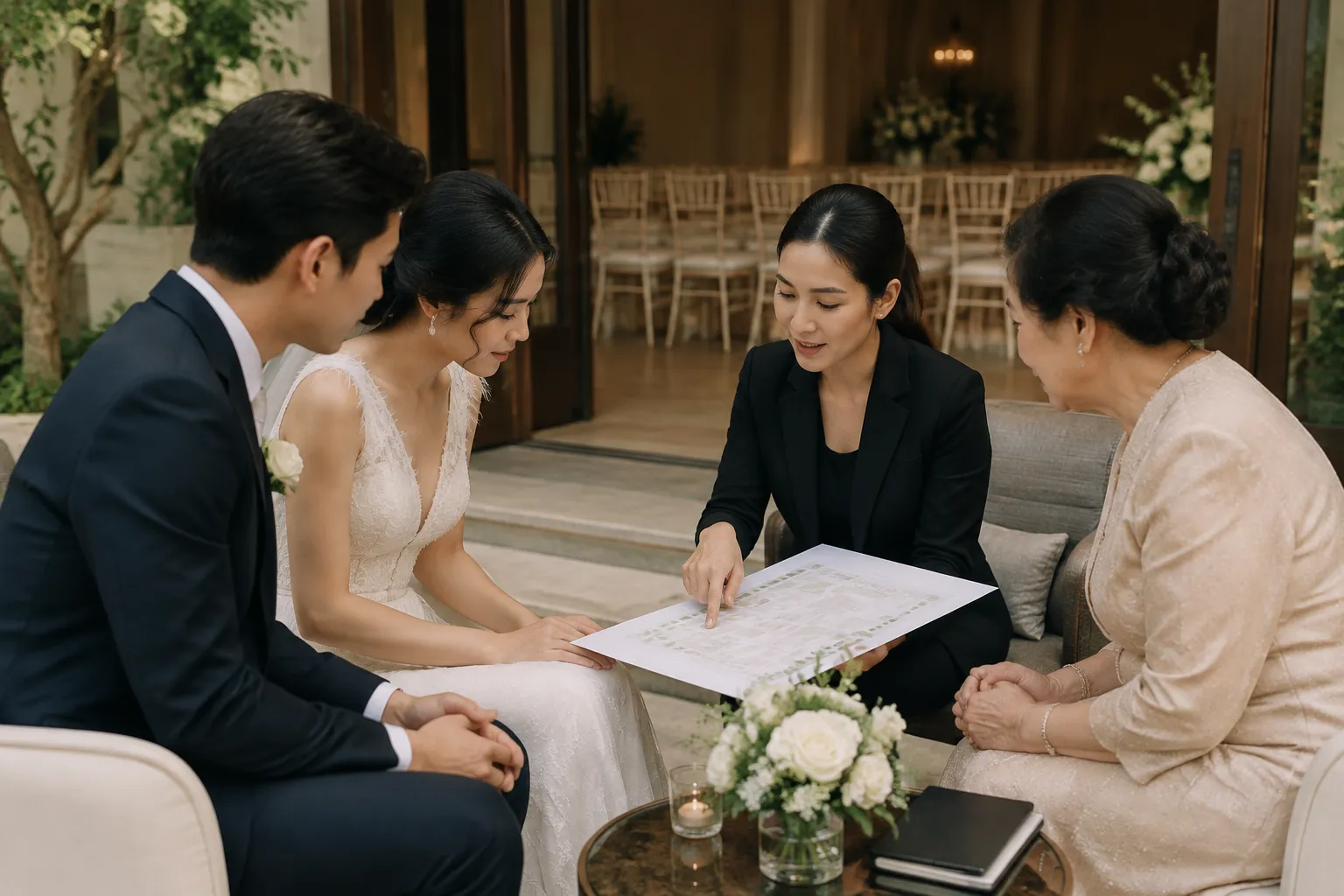
An elder may receive relatives at a designated table during a planned period. This can create meaningful contact while keeping movement predictable.
- Choose a seat with enough space around it.
- Keep food, water, personal items, and assistance within reach.
- Check the route to the restroom or rest area.
- Set a clear start and finish time.
- Assign a helper to manage interruptions.
- Agree on a discreet signal that the role is finished.
The role should not require the elder to remain available throughout the reception.
Music or Cultural Participation
An elder may choose a song, introduce a family practice, share a dance from their seat, or take part in another cultural moment that matters to the family. A Peruvian or Andean element may be important to one family and absent from another, so ask what the elder personally wants to preserve.
When the moment involves a parish, ceremony lead, musician, or reception provider, confirm its format and timing in advance. Describe its meaning in the family’s own words rather than presenting one interpretation as a shared rule.
Match the Role to Access Needs
Accessibility-first wedding planning covers the full experience from arrival through departure, not only the visible role. Review the route, instructions, waiting periods, seating, breaks, and person responsible at each stage.
Mobility and Movement
For an elder with limited mobility, roles with fewer transitions and less waiting may be easier to adapt. A seated welcome, family message, table host, or photo guide may suit the day better than a long processional, depending on the person and setting.
- Drop-off and arrival points
- Steps, slopes, thresholds, narrow passages, and surface changes
- Distance between the ceremony, photos, meal, rest area, and exit
- Seating at each transition
- Restroom and departure routes
- Whether accompaniment is available when requested
Do not rely only on a general description of venue access. Ask the venue team to describe the actual route and available arrangements in relation to the role.
Sensory and Communication Needs
A role may involve little walking but still become difficult because of loud music, changing lights, unclear announcements, or crowded spaces. Discuss the sound level, microphone use, lighting, waiting area, and how instructions will be delivered.
The elder may prefer a written schedule, phone message, verbal walkthrough, or advance visit. Ask whether they need a clear view of the person giving directions and whether a quieter place is available before or after the role.
Energy and Comfort
A meaningful role does not need to last all day. Plan a defined start and finish, seating before and after, breaks, food and drink timing, and a private place to pause.
Energy can change during a wedding day. Agree on a simple way for the elder to decline, shorten, or end the role without feeling that they have let the couple down.
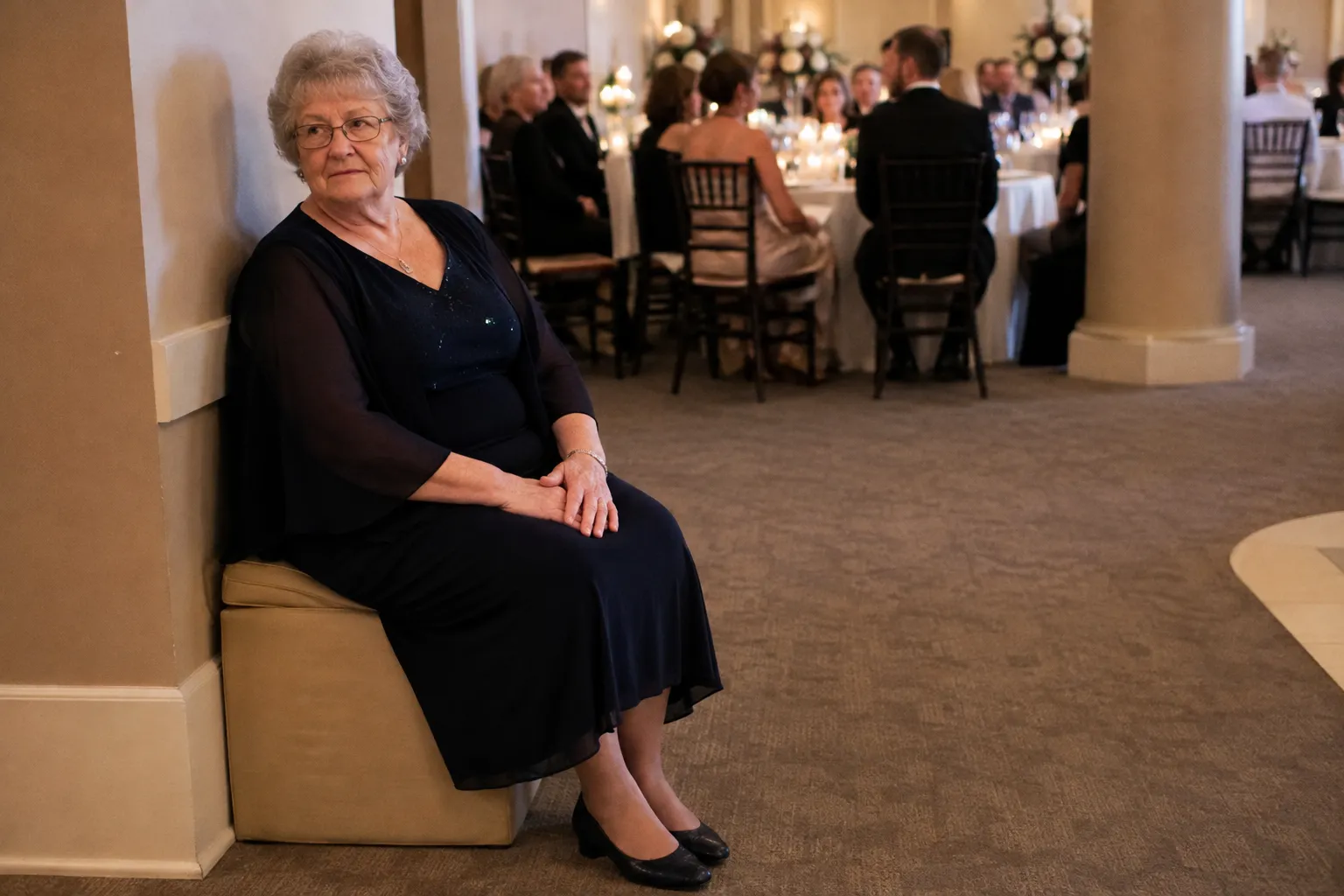
Let the Ceremony Format Shape the Role
Civil Ceremony
Ask the relevant office or ceremony lead which moments can include family participation. Do not assume that a message, presentation, reading, or processional can be added without confirmation.
- Where may the elder wait, sit, or stand?
- Can the contribution be delivered while seated?
- How long is the expected waiting period?
- Who coordinates the entrance and exit?
- Are photos permitted during or immediately after the ceremony?
Arrangements may vary by municipality and current local procedure. Confirm the ceremony format with the relevant office or ceremony lead.
Parish Ceremony
A parish ceremony may have its own order, timing, and expectations for readings, messages, processions, or family participation. A role that suits the reception may not fit within the service.
Ask which roles are possible, whether the elder can participate while seated, who provides instructions, whether a rehearsal would help, and where the elder can wait before and after the service. Treat religious participation as a conversation with the parish or ceremony lead rather than a presumed family entitlement.
Reception
The reception often allows more flexibility with seating, speeches, photos, and family acknowledgements. The role may be easier to adapt by moving it closer to the elder’s table, shortening the speaking time, offering a seated version, or scheduling it before the room becomes crowded.
Another person can read or record the message, manage the transition, or carry an item. Put these choices in the reception schedule so the elder is not asked to improvise under pressure.
Review the Venue in Stages
Follow the elder’s day in sequence:
- Arriving at the venue
- Entering the venue
- Reaching the ceremony or reception space
- Waiting before the role
- Taking part in the role
- Resting afterward
- Leaving the venue
For each stage, identify the route, responsible person, communication method, seating option, and backup choice. A role may feel suitable while the waiting period or transition afterward creates the real difficulty.
Ask the venue team for concrete information about entrances, exits, seating, restrooms, route changes, and quieter areas. Where practical, an advance visit can help the elder and their support person understand the space.
Support Autonomy With a Named Helper
A helper should support the elder’s chosen role without taking over the decision. Agree in advance on what assistance is welcome and what is not.
- Explain the schedule and walk through the route
- Carry a personal item if requested
- Offer an arm only with permission
- Identify the correct entrance or waiting place
- Track timing and communicate schedule changes
- Activate the backup plan when the elder chooses it
The elder should know who the helper is and how to reach them. Do not assign this work automatically to a spouse, daughter, granddaughter, or another female relative. Availability and willingness should be discussed directly.
Keep a Backup Role Ready
A backup preserves choice when the day changes. Discuss it privately with the elder and avoid presenting it to guests as an expected failure.
- A spoken message can become a message read by another person.
- A processional can become a seated welcome.
- Presenting an item can become an introduction while someone else carries it.
- A long photo session can become one planned portrait.
- A reception speech can become a private family moment.
- Greeting guests can become a scheduled visit at the elder’s table.
Questions to Bring to the Ceremony and Venue Teams
- Where will the elder wait, and how long will the wait last?
- What is the shortest route to the role location?
- Is seating available at each transition?
- Who gives the next instruction?
- Can the role be performed from a seated position?
- What happens if the schedule runs late?
- Where can the elder rest privately?
- How will the elder leave the space afterward?
- Who is the named backup contact on the day?
- Can the venue describe the route rather than only describing access in general terms?
For a civil or parish ceremony, direct ceremony-specific questions to the appropriate office or ceremony lead. For the reception, confirm timing and logistics with the venue and relevant providers.
A Simple Planning Conversation
“We would love to include you, but we do not want to assume what feels comfortable. Would you prefer a short ceremony role, a family moment at the reception, help with photos, or something quieter? We can plan the route, seating, timing, and a backup option around what you choose.”
Then ask, “What would make the role feel like yours?” The answer may be an enthusiastic choice, a different idea, a smaller contribution, or no formal role at all.
The Practical Boundary
The available material supports planning around preference, advance communication, flexible coordination, route checks, rest options, and backup support. It does not establish one wedding custom for grandparents, a Peru-wide accessibility practice, or current requirements for a civil office, parish, municipality, venue, or provider.
Treat role ideas as adaptable choices. Confirm ceremony details locally, ask the venue for specific logistics, and let the elder decide what meaningful participation looks like.
Sources
- Accessibility of large events: an empirical study of the Expo 2020 Dubai | Universal Access in the Information Society | Springer Nature Link
- Dancing with the Roles: Towards Designing Technology that Supports the Multifaceted Roles of Caregivers for Older Adults | Proceedings of the 2024 CHI Conference on Human Factors in Computing Systems
- Designing to Support Blind and Visually Impaired Older Adults in Managing the Invisible Labor of Social Participation: Opportunities and Challenges
- The role of duty, gender and intergenerational care in grandmothers’ parenting of grandchildren: a phenomenological qualitative study | BMC Nursing | Springer Nature Link
- Inclusive design for climbing and virtual reality events: breaking barriers and building opportunities for youth with vision impairment
- Research Review: The role of grandparents in intergenerational support for families with disabled children: a review of the literature
- The wedding performance: gender inequality and system justification in the white wedding